Structural Drying in Pflugerville, TX
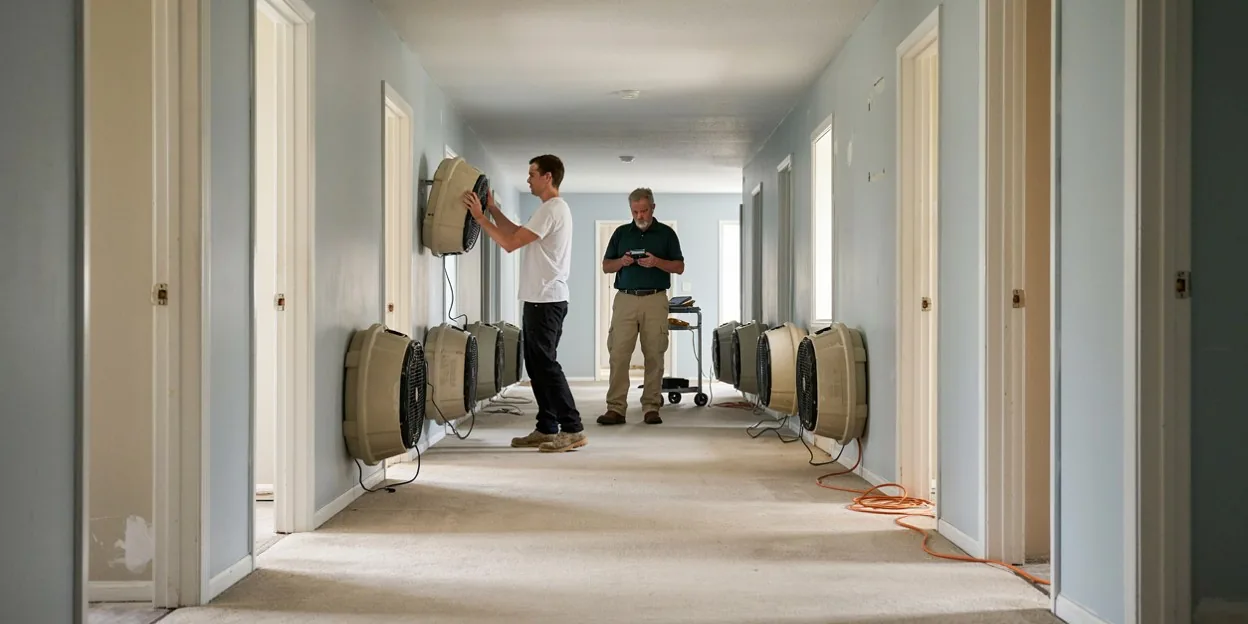
The water is gone. You mopped, you ran two box fans overnight, and the tile in the kitchen looks the way it did last week. Then you push on the baseboard and it gives, and the bottom of the wall behind the trash can is soft. That is what a slab house does: the surface dries in a day and the material underneath stays wet for a month. This site routes your call to an independent local provider who does structural drying in Pflugerville and across northeast Travis County.
What a wet wall in Pflugerville needs that a box fan cannot give it
Drying is a balance between moving air across a wet surface and pulling the moisture out of the room's air so more can leave the material. A box fan does the first half. In a humid Central Texas summer the air is already carrying most of the water it can hold, so it takes almost nothing from the wall. Commercial dehumidifiers do the second half, and the crew sizes them to the room, the amount of wet material, and the season.
The crew starts by metering every surface the extraction map flagged and writing down the numbers. Air movers go against the wet walls and under the edges of the floor. Dehumidifiers go where the readings are highest. Then someone comes back and reads the same spots again until they reach the dry standard for that material.
Before the drying equipment arrives
Leave the air conditioning on. Central air is a dehumidifier of sorts, and a house shut up with no cooling in July gets worse by the hour. Keep the wet rooms closed off from the dry ones if you can. Pull the toe kicks off the bottom of wet cabinets if they pop off easily, because that is where water sits. Do not paint or caulk anything yet. Then call.
What the meter lets the crew keep
Drywall that wicked water up from the floor can often be dried if it is not crumbling and the paper has not delaminated, especially when the crew drills small vent holes behind the baseboard line. Framing almost always dries. Tile and the mortar bed under it dry slowly but stay. Engineered wood floors have a fair chance with a drying mat system if the crew gets to them early.
Wet insulation, the pad under carpet, the fiberboard core of laminate, and particleboard cabinet bases rarely come back. If the water was contaminated, more comes out. Ask the crew to explain each call in terms of the reading.
A slab on clay, and an August that will not let go
Pflugerville houses have no crawl space, so water that gets under a floating floor sits on concrete and stays. The clay under the slab holds moisture too, which is why a floor that flooded in May can still read wet in July. If the readings stay high while the equipment runs, the crew looks for a source that is still feeding the wall, and slab leak detection may come before more drying.
Drying also has to follow extraction, not replace it, so a room with standing water is a water extraction call first. Where the water dropped from an attic line during a freeze, the burst pipe water damage page explains why the walls below the ceiling get metered too.
Drying logs with dates, readings, and equipment counts are what adjusters ask for. Make sure the provider is keeping them from the first day.
Call about the wall that still feels soft
Tell us how many days it has been since the water came in, what you have already dried, and which walls or floors still feel cool or soft. Call (512) 855-6202 and describe what the meter should find.